
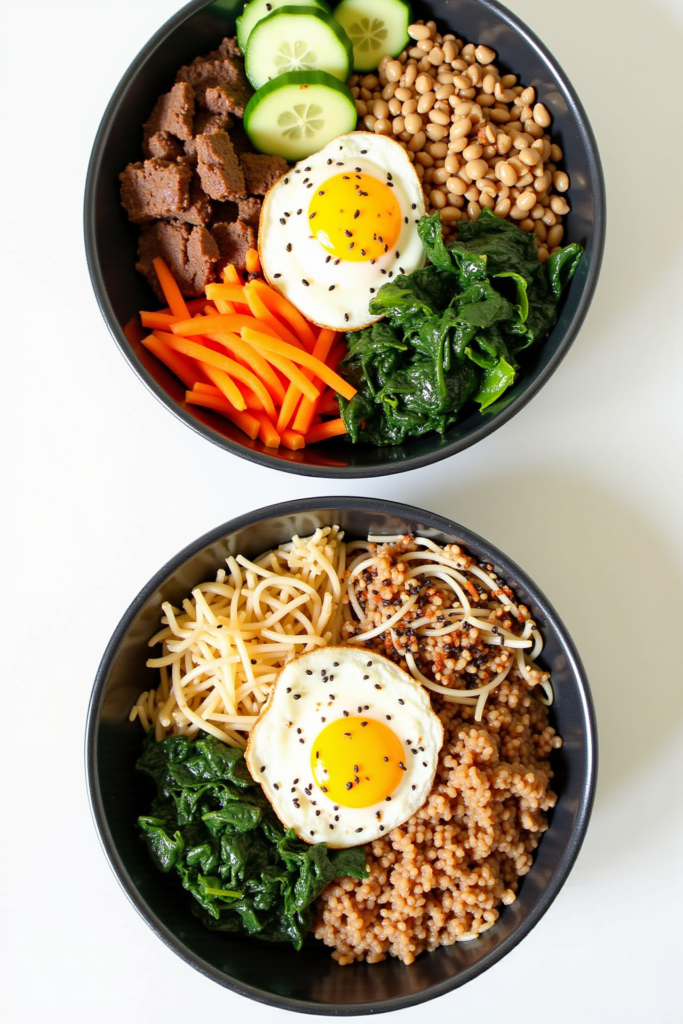

Easy Korean Bibimbap: A Healthy Delight
Introduction
Easy Korean Bibimbap offers an explosion of textures and flavors in a single bowl—vivid vegetables, perfectly cooked rice, and a savory punch of Gochujang sauce. This recipe stands out as a healthy, customizable meal that’s both visually stunning and incredibly satisfying. Bibimbap is a fantastic solution for busy weeknights, bringing together simple prep and convenience without compromising on taste.
Flavorful and Nutritious Korean Bibimbap
Bibimbap (meaning “mixed rice”) is beloved for its harmonious blend of fresh sautéed vegetables, protein, and a vibrant, spicy-sweet sauce. Its beauty lies in its versatility—you can use almost any combination of veggies or proteins on hand, making it a great way to eat healthy and reduce food waste. Every component brings something special, making it a reliable crowd-pleaser and an exciting meal for anyone aiming to add more color and nutrition to their plate.
Building Layers of Flavor
The foundation of Bibimbap is steamed rice (white or brown), which soaks up all the juices and flavors. Sautéed carrots, spinach, zucchini, and shiitake mushrooms bring crunch and nutrition. A fried egg adds a creamy richness, while Gochujang sauce infuses the bowl with authentic Korean heat and tang. For added protein, you can include sliced beef, chicken, or tofu—making this recipe endlessly adaptable.
Expert Tips for Assembling Easy Korean Bibimbap
Arrange your cooked vegetables and protein artfully around a bowl of rice, leaving the center open for a sunny-side-up egg. Spoon vibrant Gochujang sauce over the top just before serving. When ready to eat, mix everything together thoroughly: the sauce will infuse every component, ensuring each bite is bursting with bold, layered flavors.
Serving Suggestions for a Show-Stopping Easy Korean Bibimbap
Top your Bibimbap with toasted sesame seeds, a drizzle of sesame oil, and freshly sliced green onions. A side of kimchi adds zing and probiotics. This dish is perfect for meal prepping or serving as a lively centerpiece at a family dinner.
Nutritional Information and Serving Size
This recipe makes approximately 4 filling bowls. With a generous serving of vegetables, lean protein, and minimal added fats, each portion contains about 400–450 calories (varies with protein choice and toppings)—perfect for a balanced, nutritious main course.
Easy Korean Bibimbap: A Healthy Delight (Recap)
Easy Korean Bibimbap combines convenience, nutrition, and unforgettable flavor in a single bowl. Its beautiful presentation and versatility make it an easy favorite for healthy, satisfying meals at home.
Ingredients
💡Meal Planning Tip: Save this recipe to automatically generate an organized shopping list with all ingredients sorted by store section—perfect for efficient grocery trips and seamless meal planning.

Instructions
- Prepare rice according to package instructions and keep warm.
- Heat 1 teaspoon sesame oil in a skillet over medium heat. Sauté carrots with a pinch of salt for 2–3 minutes until tender. Remove and set aside.
- Add a bit more oil if needed and sauté zucchini with a pinch of salt for 2–3 minutes until softened. Remove and set aside.
- Sauté sliced shiitake mushrooms (add 1 teaspoon soy sauce and minced garlic) for 3–4 minutes until browned and fragrant. Set aside.
- Wilt spinach in the hot skillet with a splash of water for about 30 seconds, then season lightly with salt and set aside.
- If using meat or tofu, stir-fry with 1 teaspoon soy sauce and black pepper until cooked through. Set aside.
- Mix Gochujang, rice vinegar, sugar, and water to make a smooth sauce. Adjust consistency with more water if needed.
- Fry eggs sunny-side up in a lightly oiled, nonstick skillet. Yolks should remain runny for creamy texture.
- Assemble: In each bowl, add a scoop of rice and neatly arrange cooked vegetables and protein around the sides. Place a fried egg in the center.
- Drizzle with Gochujang sauce, sprinkle with sesame seeds and green onions. Serve with kimchi if desired. Mix before eating and enjoy!
Weekly Meal Planning
Easy Korean Bibimbap is ideal for meal planning—prepare the veggies and protein ahead of time, then simply reheat and assemble fresh eggs when ready to serve. Save and schedule this recipe in your weekly rotation to automatically generate a consolidated, store-organized shopping list that includes ingredients from all your planned recipes.
Planning Benefits:
Automatically calculates total ingredient needs—no more last-minute runs
Sorts your shopping list by grocery sections for quick, efficient trips
Combines quantities for shared ingredients across multiple meals
Helps reduce food waste by organizing meal prep smartly
Pro tip: With CookifyAI, schedule all your weekly recipes to keep your ingredients list accurate, organized, and up-to-date.
Cook and Prep Times
Prep Time: 20 minutes
Cook Time: 20 minutes
Total Time: 40 minutes

